SS Robin London
London · United Kingdom · 2002–2013
Technical data
- Client
- SS Robin Trust
- Floor area
- 1,632 m²
- Period
- 2002–2013 (12 years of collaboration)
- Ship launched
- 1890
- Honorary patron
- Prince Philip, Duke of Edinburgh
- Studio phases
- Concept · design · restoration · engineering · commercial support
- Status
- Built
Description
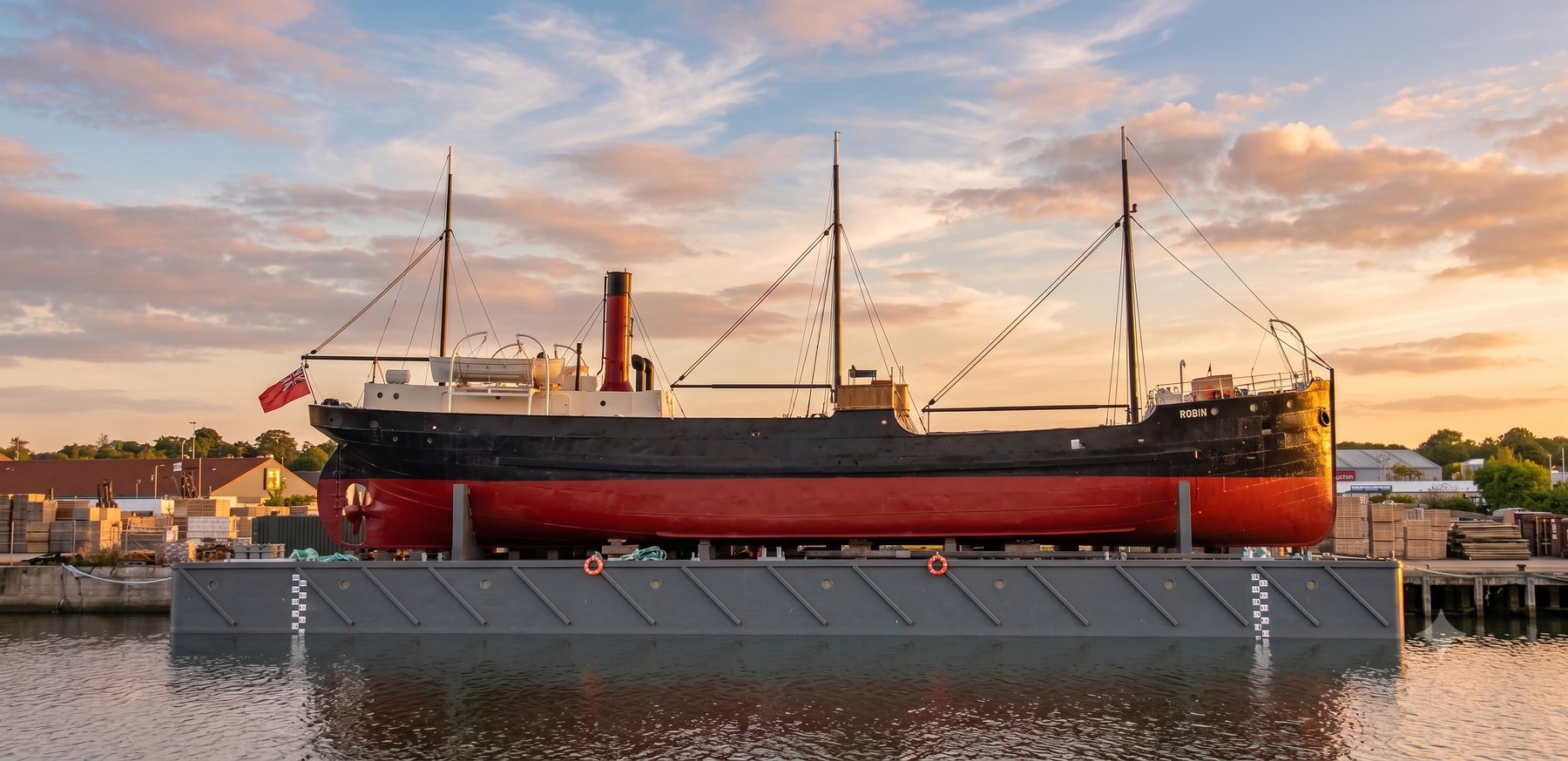
The SS Robin was launched in 1890 at the Royal Victoria shipyard in London. Ten years later, it was acquired by a Spanish company and renamed María, beginning a long period of service in the waters of the Cantabrian Sea. Its presence became part of popular memory and later inspired the 1960 feature film María, matrícula de Bilbao, starring a young Arturo Fernández.
In 1974, the vessel returned to England with an uncertain future. Its historic value was recognised by maritime heritage specialists, initiating a preservation process aimed at protecting an exceptional piece of British naval history. The SS Robin is considered the oldest surviving coastal steamship in the world, retains its original engine and is listed among the most significant historic vessels in the British fleet.
The project had Prince Philip, Duke of Edinburgh, as its honorary patron. He visited the vessel in the years preceding his retirement from public life, reflecting the cultural and heritage value of a ship that extends beyond its technical condition to become a material record of European industrial navigation.
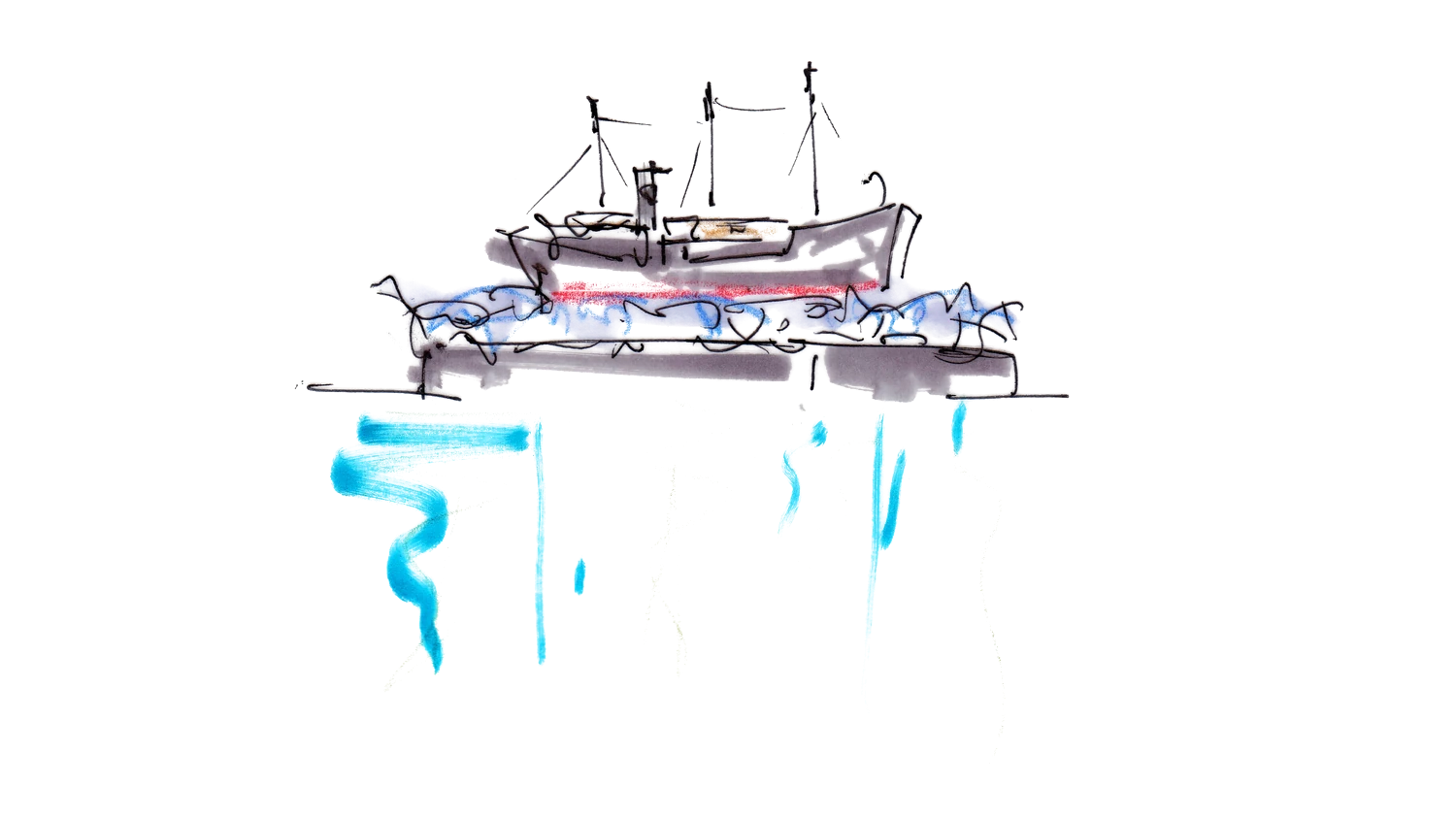
The intervention presented a singular challenge: to preserve the historic character of the vessel while making it understandable, accessible and viable for the 21st century. The solution was based on a supporting pontoon, built in Poland and towed to the east coast of England, onto which the SS Robin was lifted. This operation made it possible to keep the ensemble afloat, protect the structure and reveal the beauty of the hull through a new relationship with the water.
Between 2002 and 2013, the studio's collaboration covered the conceptual, design, restoration, engineering, documentation and commercial support stages of the project. The work combined heritage sensitivity, technical precision and international coordination to contribute to the preservation of a unique piece of European maritime history.